ARK 2030 Home

Category

Biodiversity & Genomics

10 articles

The Long Life Problem: Bioethics, Inequality, and the Uncomfortable Questions America's Longevity Scientists Must Answer

The Long Life Problem: Bioethics, Inequality, and the Uncomfortable Questions America's Longevity Scientists Must Answer

American longevity research is advancing at a pace that has outrun the ethical and policy frameworks designed to govern it. From questions of access and economic disruption to the biological risks of extending lifespan without fully understanding aging, bioethicists and gerontologists are sounding alarms that the field's most enthusiastic proponents have been slow to engage.

The Forest Is Speaking: How Machine Learning Is Decoding Ecosystem Distress Through Sound

The Forest Is Speaking: How Machine Learning Is Decoding Ecosystem Distress Through Sound

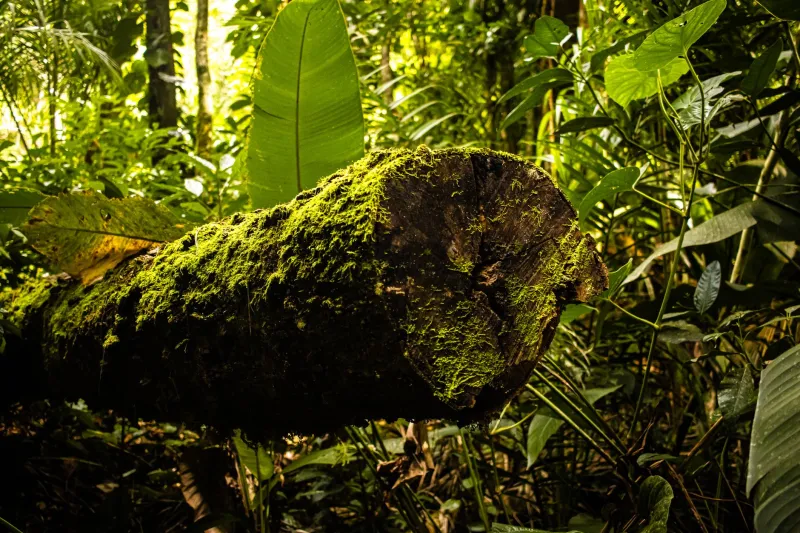
Across America's most vulnerable biomes, a new generation of acoustic sensor networks is capturing the sonic fingerprints of ecological health—and decline. By training machine learning algorithms on the complex layering of species calls, insect choruses, and ambient soundscapes, researchers are developing the first real-time early warning systems for biodiversity collapse. The implications for conservation science, and for how we understand ecosystem integrity, are profound.

Colonized for a Cure: Inside America's Race to Turn Gut Microbes Into Living Medicine

Colonized for a Cure: Inside America's Race to Turn Gut Microbes Into Living Medicine

Across university laboratories and biotech corridors from Boston to San Diego, scientists are reprogramming the bacteria that already inhabit the human gut to manufacture and deliver therapeutics on demand. The ambition is extraordinary: replace the pill bottle with a self-sustaining biological system that never runs out. Whether this vision can survive the journey from petri dish to pharmacy shelf may define one of medicine's most consequential transitions before 2030.

Blueprints for Biology: Inside the American Labs Engineering Proteins That Never Existed in Nature

Blueprints for Biology: Inside the American Labs Engineering Proteins That Never Existed in Nature

Armed with AI-driven structural prediction tools and a new understanding of molecular geometry, American researchers are designing proteins from scratch — molecules that evolution never produced but that could dismantle diseases that have resisted every known treatment. The structural biology revolution quietly unfolding across US universities and biotech corridors may fundamentally redefine what a drug can be by 2030.

Reprogrammed Defenses: How America's Immunoengineers Are Turning the Body Into Its Own Most Powerful Medicine

Reprogrammed Defenses: How America's Immunoengineers Are Turning the Body Into Its Own Most Powerful Medicine

A new generation of American researchers is moving beyond conventional pharmaceuticals to rewrite the operational logic of the human immune system itself. From engineered T-cell therapies targeting solid tumors to experimental immune interventions aimed at neurodegenerative disease, synthetic immunology is emerging as one of the most consequential scientific frontiers ahead of 2030. The stakes extend far beyond the laboratory — they reach into the fundamental question of what it means to treat,

Consumed From Within: The Biological Recycling Revolution Targeting America's Plastic Crisis

Consumed From Within: The Biological Recycling Revolution Targeting America's Plastic Crisis

Across a growing network of American research institutions, scientists are engineering bacteria, fungi, and synthetic enzymes capable of dismantling plastics that would otherwise persist in landfills for centuries. From the National Renewable Energy Laboratory to university spinouts in the Southeast, a new field of biological recycling is gaining momentum — and it may fundamentally alter what we mean by the word 'waste' before 2030.

Molecules by Design: Inside the American Labs Rewriting the Language of Life to Cure the Incurable

Molecules by Design: Inside the American Labs Rewriting the Language of Life to Cure the Incurable

A new generation of American researchers is no longer waiting for nature to provide the proteins medicine needs — they are building them from scratch. Using AI-driven computational tools and structural biology, institutions like the University of Washington's Institute for Protein Design are constructing molecular machinery that has never existed on Earth. By 2030, this discipline could fundamentally alter how the United States approaches everything from rare genetic disease to antibiotic resist

Chemical Signals, Digital Minds: The American Push to Give Machines a Sense of Smell

Chemical Signals, Digital Minds: The American Push to Give Machines a Sense of Smell

A new wave of molecular sensor technology is enabling AI systems to read the invisible chemical vocabulary that living organisms have spoken for millions of years. From breath-based cancer diagnostics to field sensors that detect crop disease before a single leaf wilts, American researchers are racing to digitize olfaction itself. By 2030, the ability to decode airborne chemical signals could fundamentally reshape how medicine, agriculture, and environmental science operate.

The Clock Rewinders: How America's Longevity Science Surge Could Remake Society by 2030

The Clock Rewinders: How America's Longevity Science Surge Could Remake Society by 2030

A convergence of federal funding, Silicon Valley capital, and university research is accelerating biological aging science at a pace that would have seemed implausible a decade ago. Senolytics, epigenetic reprogramming, and related interventions are moving from laboratory curiosity toward clinical reality — but the societal implications extend far beyond medicine.

Sequencing the Living World: The Global Race to Archive Earth's Genetic Blueprint Before 2030

Sequencing the Living World: The Global Race to Archive Earth's Genetic Blueprint Before 2030

Scientists across the globe are engaged in one of the most ambitious biological undertakings in history: cataloguing the complete genetic code of every known species on Earth before extinction erases them forever. The Earth BioGenome Project and allied US institutions are building what may become humanity's most consequential scientific archive. What they learn — and what they preserve — could determine the trajectory of life on this planet well past 2030.